Why Your Parlay Ticket Is Basically a Donation to the Sportsbook
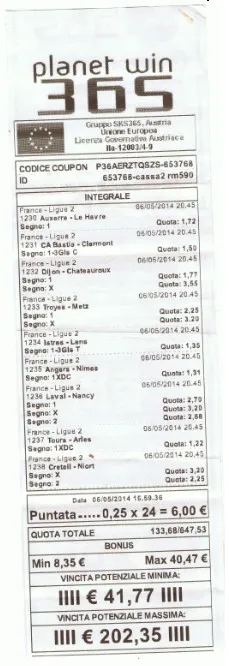
Photo: Nicholas Gemini, CC BY-SA 3.0, via Wikimedia Commons
There's nothing quite like the feeling of locking in a five-team parlay on a Sunday afternoon. The potential payout looks enormous. You've done your research. You know these teams are going to cover. By 8 PM, you're either celebrating or staring at a busted ticket wondering how it all went sideways on leg three.
If that second scenario sounds familiar, you're not alone — and you're not just unlucky. The math is working against you in ways most casual bettors never stop to examine.
At SolBet88, we're all about playing bold. But playing bold doesn't mean playing blind. Let's break down what's really happening when you chase those parlay paydays.
The Juice Gets Juicier With Every Leg You Add
Here's the core problem: sportsbooks don't just stack your odds when you build a parlay. They stack their edge.
On a standard -110 point spread bet, the house holds roughly a 4.5% edge. That's already a hill you're climbing on every single wager. Now imagine multiplying that disadvantage across multiple legs.
Let's use real numbers. Say you're betting three -110 sides. The true odds of hitting all three — if each has a 50% chance of winning — is 12.5% (0.5 × 0.5 × 0.5). A fair payout would be 7-to-1, or +700. Most sportsbooks pay out somewhere around +600 on a three-teamer. That gap between what you should get paid and what you actually get paid? That's the hidden tax on every parlay you place.
Scale that up to a five-team parlay and the sportsbook's theoretical hold jumps to somewhere between 15% and 25% depending on the platform. Compare that to the 4.5% vig on a straight bet and you start to see the picture clearly.
A Tale of Two Bettors
Let's put this in concrete terms with a scenario most US sports bettors will recognize.
Bettor A places a $50 five-team NFL parlay every Sunday for 10 weeks. Total investment: $500. They hit one parlay out of ten — which, frankly, is a decent run. Payout on a five-teamer at a standard book: roughly $1,600. Net profit after $500 in bets: $1,100.
Bettor B takes that same $500 and bets $50 per game across 10 individual games, sticking to sides they've actually researched. They win 55% of their bets — a realistic win rate for a disciplined bettor — going 6-4 across those 10 wagers. At -110 juice, each win nets roughly $45.45. Six wins equals about $272 in profit. Not as glamorous, but here's the key difference: Bettor B can sustain that approach. The variance is manageable. The bankroll survives the cold stretches.
Bettor A, on the other hand, needs to hit that one parlay per 10 weeks just to stay above water. Miss two in a row? Down $500 with nothing to show for it. The psychological pressure alone starts warping decision-making.
Why Our Brains Love Parlays (Even When They Shouldn't)
The parlay isn't just a math problem — it's a psychology problem. And the sportsbooks know it.
Humans are wired to weight potential upside more heavily than probability. A $50 bet that could return $1,600 feels more exciting than a $50 bet that returns $95. That emotional pull is real, and it's exactly what keeps players chasing tickets that rarely cash.
There's also something called the "near-miss effect" at play. When you go 4-for-5 on a parlay and lose on the final leg, your brain registers that as almost winning rather than losing. It fuels the urge to try again, tweak the lineup, add one more leg. Before long, you're not betting strategically — you're chasing a feeling.
When Parlays Actually Make Sense
Okay, so parlays aren't all bad. There are a few legitimate spots where they belong in a smart bettor's toolkit.
Correlated parlays are the clearest example. These involve legs that are statistically connected — like betting the over on a game and betting both teams to score more than a certain number of points. Not every sportsbook allows these, but when they do, the correlation reduces the sportsbook's edge significantly.
Small-stake entertainment plays are another valid use case. If you're setting aside $10 purely for the thrill of a long-shot ticket, that's fine. Treat it like buying a lottery ticket — a small, defined entertainment cost, not a core part of your strategy.
Positive EV parlay opportunities occasionally pop up when you've identified multiple mispriced lines on the same slate. If your research genuinely shows that two or three lines are off, combining them can amplify your edge rather than dilute it. The key word there is genuinely — this requires serious line-shopping and real handicapping work, not gut feelings.
A Framework for Keeping Parlays in Their Lane
If you're going to include parlays in your betting approach at all, here's a simple framework to keep them from eating your bankroll alive:
-
Cap your parlay spend at 10% of your weekly betting budget. This keeps the fun alive without letting it dominate your strategy.
-
Never parlay more than three legs. The mathematical edge erosion beyond three legs is brutal. Two-teamers and three-teamers are where the numbers are most tolerable.
-
Only parlay games you'd bet individually anyway. If a leg doesn't stand on its own merits as a straight bet, it doesn't belong in your parlay. Don't add games just to inflate the payout.
-
Track your parlay results separately. Keep a log. After 30 to 50 parlay tickets, look at your actual ROI. The numbers will tell you everything you need to know.
-
Never parlay to "make back" losses. This is where the real danger lives. Using parlays as a recovery mechanism after a bad week is a fast track to a deeper hole.
The Bottom Line
Parlays aren't evil. They're just expensive when used as a primary strategy. The sportsbook loves them because they generate higher margins with less risk on the house's end. Every time you add a leg, you're handing back a little more of your edge.
The bettors who build real, sustainable profits at SolBet88 — the ones playing bold and playing smart — tend to treat parlays as a seasoning, not the main course. They grind out value on well-researched single bets, manage their bankroll with discipline, and only sprinkle in the occasional multi-leg ticket when the math actually supports it.
Big paydays are real. But they're built through consistency, not lottery-ticket thinking. Keep that in mind next Sunday before you lock in that six-teamer.